1 The Apple Cider Vinegar Trick
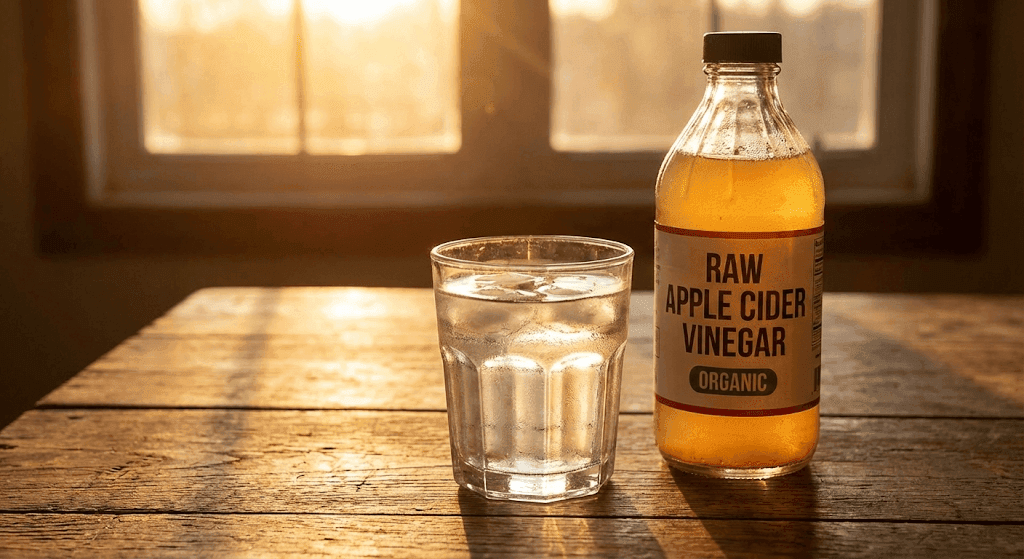
Drink 1 tablespoon of apple cider vinegar in a large glass of water BEFORE your most carbohydrate-rich meal of the day. Sounds simple, but it's biochemical gold.
The acetic acid inactivates enzymes that break down starch into sugar. This can reduce the blood sugar spike after meals by up to 30%, leading to less insulin release and less fat storage.
2 The "Protein-First" Rule
At every meal, EAT the protein (meat, fish, tofu, eggs) and vegetables FIRST before touching the carbohydrates (rice, potatoes, pasta).
Protein is the most satiating and has the highest "Thermic Effect of Food" (TEF) – your body uses 20-30% of the calories just for digestion. It also buffers the blood sugar spike from the subsequent carbohydrates.
3 Water Loading
Drink 500ml of water about 30 minutes BEFORE each meal. Not during, but before.
Studies show that this automatically reduces calorie intake at the meal because the stomach is already sending stretch signals. Hydration also optimizes enzymatic fat burning.
4 Sleep is More Important than Exercise
If you have to choose between an extra hour of sleep or an hour of jogging when sleep-deprived – choose sleep.
Sleep deprivation increases ghrelin (hunger hormone) and decreases leptin (satiety hormone). Those who sleep too little consume an average of 300-400 kcal more the next day, often unconsciously.
5 The Caffeine/Green Tea Boost
Drink coffee (black) or green tea in the morning. The caffeine and catechins (in green tea) are natural metabolism boosters.
Caffeine slightly increases lipolysis (fat release) and the basal metabolic rate. EGCG in green tea promotes fat oxidation, especially in combination with exercise.
6 Cold Shower (Cold Exposure)
End your morning shower with 30-60 seconds of cold water. Breathe deeply and calmly during this time.
Cold activates "Brown Adipose Tissue" (BAT). This tissue burns glucose and fats to generate heat (thermogenesis). Regular cold exposure permanently increases the basal metabolic rate.

7 Slow Eating (20-Minute Rule)
Set a timer or simply eat mindfully and slowly. Put down your cutlery between bites.
It takes about 20 minutes for satiety hormones (like PYY and GLP-1) to reach the brain. Those who gulp down their food eat beyond hunger before the "stop" signal arrives.
8 Fiber Upgrade
Mix ground flaxseeds, chia seeds, or psyllium husks into your yogurt, shake, or salad.
Soluble fibers form a gel in the gut that slows down the absorption of sugar and fat, keeping you full longer. It's the easiest way to lower the glycemic index of a meal.
9 Increase NEAT
NEAT stands for "Non-Exercise Activity Thermogenesis." This includes fidgeting, standing, climbing stairs, and cleaning.
NEAT makes up a much larger part of your daily calorie expenditure than exercise. The difference between a sedentary and an active person can be up to 2000 kcal per day!
10 The Small Plate Trick
Eat from breakfast plates (about 20-22cm) instead of large dinner plates (28-30cm).
This is the "Delboeuf Illusion." An identical portion looks huge on a small plate and tiny on a large plate. Your brain registers "a lot of food," and you feel fuller with fewer calories.
Do you want your personal metabolism plan?
I can analyze which of these 10 hacks fit best into your daily routine and create an individual 7-day action plan for you.
Start analysis now & receive plan