Chapter 1: The Hype Around "Super" – Marketing vs. Reality
The term "superfood" is not a scientific term but a purely marketing invention of the 1990s. It describes foods that have a particularly high concentration of vitamins, minerals, or antioxidants. But does a handful of chia seeds automatically turn a poor diet into a good one? The short answer is: No.
Scientific Background: The ORAC Scale
The "superpower" of a food is often measured by its ORAC value (Oxygen Radical Absorbance Capacity). This indicates how well a food can neutralize free radicals. While acai berries achieve top scores here, local wild blueberries are not far behind – often at a fraction of the price and transportation costs.
In modern nutritional science, the focus is increasingly shifting away from a single "wonder food." Much more important is the concept of **nutrient density**. An ideal superfood should provide many micronutrients while having a low caloric density. This includes especially deep red or purple fruits, dark leafy greens, and oilseeds.
The Psychological Trap of Superfood Marketing
Did you know that just the word "superfood" on a package causes consumers to perceive the product as healthier than it actually is? This phenomenon is called "Health Halo." An extremely sweetened muesli does not become healthy just because it contains 2% goji berries. We need to learn to look at the ingredient list again, rather than just the colorful marketing promises on the front.
Chapter 2: The Exotic Check – What the Far-Traveled Can Really Do
Chia, acai, goji, or moringa – these names sound like distant worlds, rainforests, and ancient shamanic knowledge. They are undoubtedly healthy, but we need to realistically weigh the benefits against price and environmental impact.
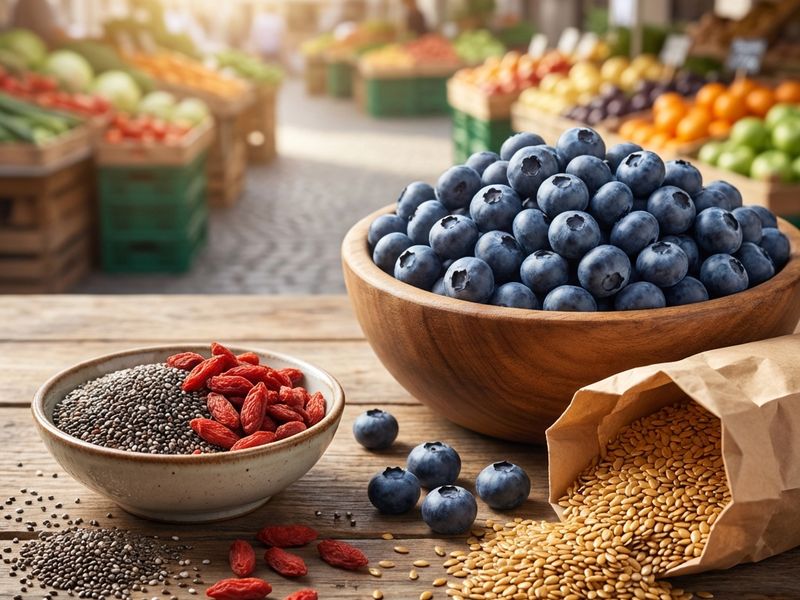
Chia Seeds (Mexico/South America)
They are world-famous for their content of omega-3 fatty acids (alpha-linolenic acid) and their enormous water-binding capacity. Chia seeds can bind 12 times their weight in water, making them an excellent satiator. They promote digestion and provide valuable protein.
Acai Berry (Brazil)
The berry from the Amazon is extremely rich in anthocyanins, which can protect the heart and blood vessels. Since the berries spoil extremely quickly, we usually get them in Europe only as expensive powder or frozen puree. The processing level may have already reduced the valuable enzymes.
Goji Berries (China/Tibet)
In Traditional Chinese Medicine (TCM), they have been valued for thousands of years. They contain 18 amino acids and more iron than spinach. But beware: Conventional goji berries from China are often heavily contaminated with pesticides. Be sure to choose organic quality here.
A Word on Sustainability:
Superfoods that fly halfway around the planet leave a huge ecological footprint. Moreover, local small farmers often benefit the least from the hype – on the contrary: Due to the exploding demand in the West, prices in the country of origin rise so sharply that the local population can no longer afford their traditional food (as happened with quinoa).
Chapter 3: Local Heroes – Superfoods from Your Farmer
Why wander far when the good grows so close? Our local flora offers alternatives that are just as nutrient-rich as the exotics.
Flaxseeds (instead of Chia)
Flaxseeds have a nearly identical nutrient profile as chia. They even provide more omega-3 and are significantly cheaper. Be sure to eat them ground so your body can access the nutrients.
Blueberries & Aronia (instead of Acai)
Wild blueberries are the true champions of antioxidants. They are available locally and can be frozen seasonally without losing their power.
Rosehip & Sea Buckthorn (instead of Camu Camu)
When it comes to vitamin C, these two local shrubs are unbeatable. Sea buckthorn is not called the "lemon of the north" for nothing – it has many times more vitamin C compared to citrus fruits.
Local Star: Kale
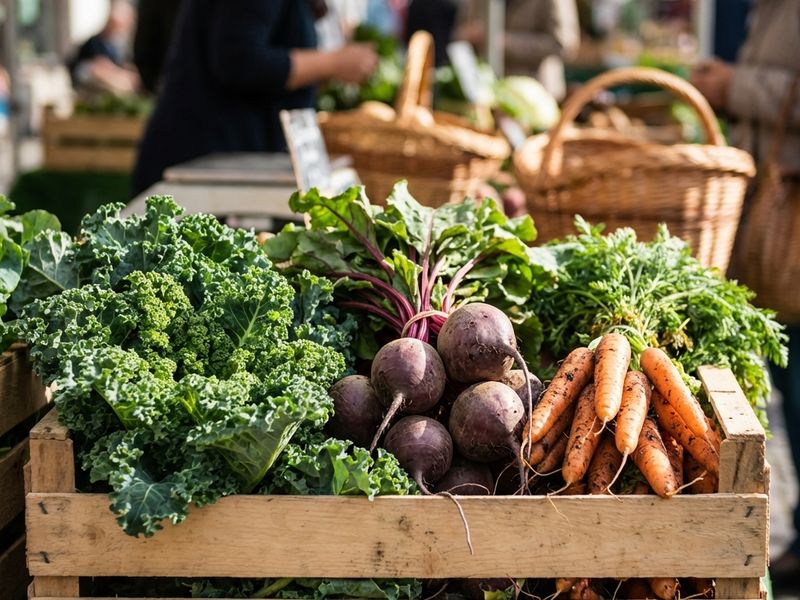
What is sold in New York as a "kale smoothie" for 12 dollars is classic winter vegetable for us. Kale provides massive amounts of vitamin K (important for bones and blood clotting), vitamin A, and fiber. It has strong anti-inflammatory effects and supports the liver's detoxification processes.
Wild Herbs: The Free Superfood
We have forgotten what grows in our own backyard. Nettles contain more iron than meat, goutweed provides massive vitamin C, and dandelion is a real booster for gallbladder and liver. These plants are biologically adapted to the region and possess enormous vitality, which they pass on to you.
Chapter 4: Nutrient Density and Synergy Effects
A true superfood rarely works in isolation. In nature, nutrients always exist in a complex. For example, curcumin (from turmeric) needs a pinch of black pepper (piperine) and some fat to be absorbed by the body.
The Rainbow Rule:
Eat at least three different colors of vegetables every day. Each color represents different secondary plant compounds (phytochemicals). Red (lycopene), orange (beta-carotene), green (chlorophyll), blue/purple (anthocyanins). This way, you cover the entire spectrum without having to swallow expensive pills.
Ultimately, the best superfood is the one that you actually eat – regularly and sustainably. One acai bowl per month brings less benefit than a daily handful of walnuts or a serving of broccoli.
Chapter 5: Conclusion – Back to the Roots
Marketing can tell us a lot, but biochemistry does not lie. Superfoods are a great addition when we understand them as part of a holistic diet and not as a get-out-of-jail-free card for an unhealthy lifestyle. Focus on local, seasonal, and natural foods. Your body and your wallet will thank you.
- Pay attention to quality: Organic products often have significantly higher nutrient values.
- Avoid sugar traps: Superfood bars are often just disguised candies.
- Listen to your gut feeling: Your body often knows best what it needs.
Do you want to know which nutrients YOU currently need?
Your Health & Wellness Assistant analyzes your needs and gives you personalized recommendations for YOUR superfoods.
Start Free Check