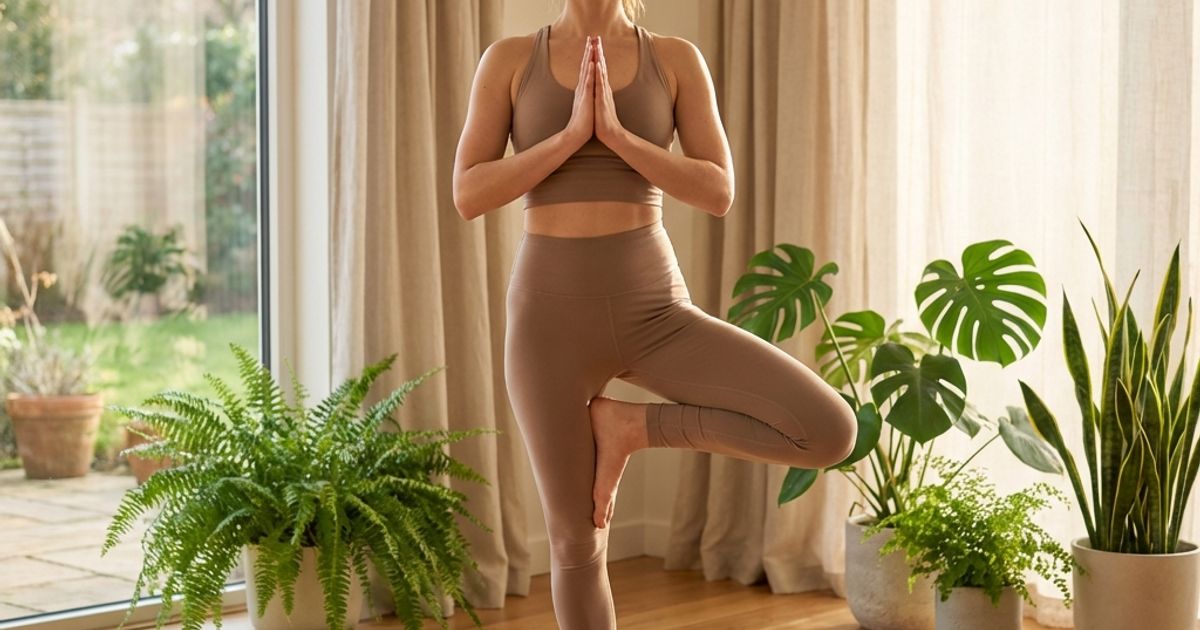
Do I need to be able to touch my toes? Do I need expensive leggings? No. Yoga is not (only) acrobatics. It is a thousands-of-years-old practice to bring the body, breath, and mind into harmony. And anyone can do it.
More Than Just Stretching: What Yoga Brings
Yoga combines static strength, dynamic movements (flow), and conscious relaxation. The benefits are well-supported by science:
- Stress Reduction: Lowers cortisol and blood pressure.
- Core Muscles: Strengthens the core more sustainably than many machines.
- Proprioception: Improves body awareness and posture.
The Jungle of Yoga Styles
Confused by the terms? Here are the "Big 3" for beginners:
- Hatha Yoga: The classic. Slow, static, focus on correct alignment. Ideal for starting out.
- Vinyasa Flow: Dynamic. Movements flow into each other, synchronized with the breath. More athletic.
- Yin Yoga: Passive. Poses are held for minutes (often on the floor) to stretch the fascia. Very relaxing.
The "Fantastic Four" for Home
1. Mountain Pose (Tadasana)
Sounds simple (standing), but it's complex. Feet hip-width apart, toes spread. Pelvis neutral. Shoulders relaxed back and down. The crown of the head pulls toward the sky. Feel the grounding.2. Downward-Facing Dog (Adho Mukha Svanasana)
From all fours, push the hips up and back. The body forms an inverted V. Knees can be bent! A straight, long back is more important.3. Child's Pose (Balasana)
The ultimate relaxation posture. Kneel down, sit on your heels, forehead to the floor. Arms either far forward or relaxed back. Breathe into the lower back.4. Warrior I (Virabhadrasana I)
Large lunge. Front knee bent over the ankle. Back leg straight, foot turned in 45 degrees. Arms powerfully upward. Opens the hips and strengthens the legs.Pranayama: The Power of Breath
In yoga, the breath leads the movement. Try to breathe through the nose. Make the breath audible (Ujjayi breathing, sounds like ocean waves). This calms the mind and warms the body from the inside.
- Patanjali
Frequently Asked Questions
Find your inner center.
The Health & Wellness Assistant can help you integrate mindfulness and movement routines into your busy everyday life.
Start Mindfulness 🧘♀️