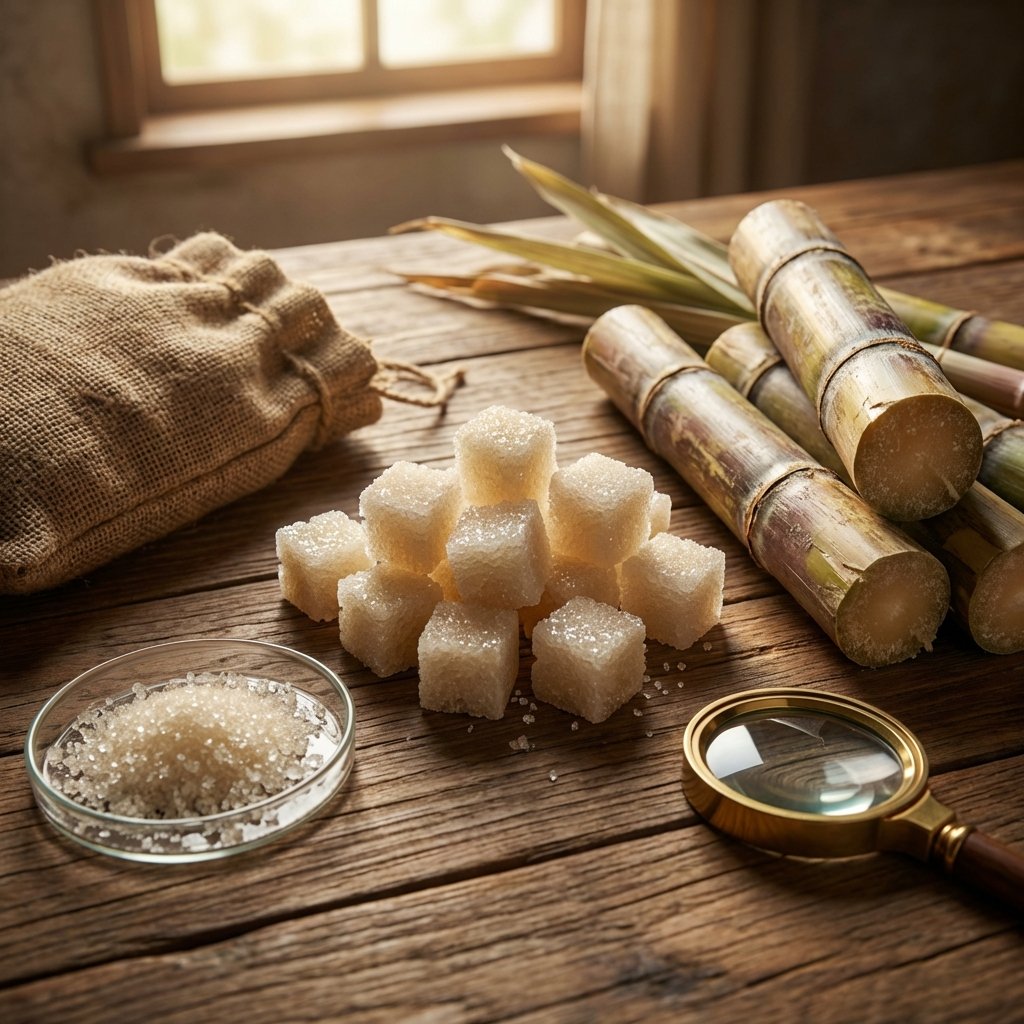
1. The Legacy of Our Ancestors
Why is it so hard to say no to chocolate?
Ever felt remote-controlled when you see a bar of chocolate? Don't blame yourself. That's not weakness of will, but evolution. For our ancestors, a sweet taste was the most reliable signal for high-energy, non-toxic food.
In the Stone Age, there were no supermarkets. Sugar only existed seasonally in the form of ripe fruit or rare honey. Those who grabbed it survived the winter better. Your brain is still working in "survival mode" – but unfortunately, you live in a world of abundance.
🧠 The Reward System
Sugar activates the same reward system in the brain as nicotine or cocaine. Dopamine is released – the "happiness hormone." You briefly feel good, energetic, and happy. The problem: the body gets used to it and demands this kick more and more often.
2. Not All Sugar is Created Equal
Glucose, fructose, sucrose – do you still have a grasp on it?
Sugar is often portrayed as a single villain. Chemically speaking, however, that's wrong. There are huge differences in how different types of sugar are metabolized in your body.
Glucose (Dextrose)
The fuel of life. Every cell in your body can use glucose. Your brain runs almost exclusively on it. Glucose causes insulin levels to rise rapidly to channel the sugar into the cells.
Fructose (Fruit Sugar)
Sounds healthy, but is tricky. Fructose is processed almost exclusively in the liver. Insulin is hardly needed, which is why the feeling of satiety is absent. An excess of isolated fructose (e.g., in soft drinks) can strain the liver – similar to alcohol.
Sucrose (Table Sugar)
The classic in the sugar shaker. It consists of 50% glucose and 50% fructose. Your body must first split it before it can use it. It combines the "advantages and disadvantages" of both worlds.
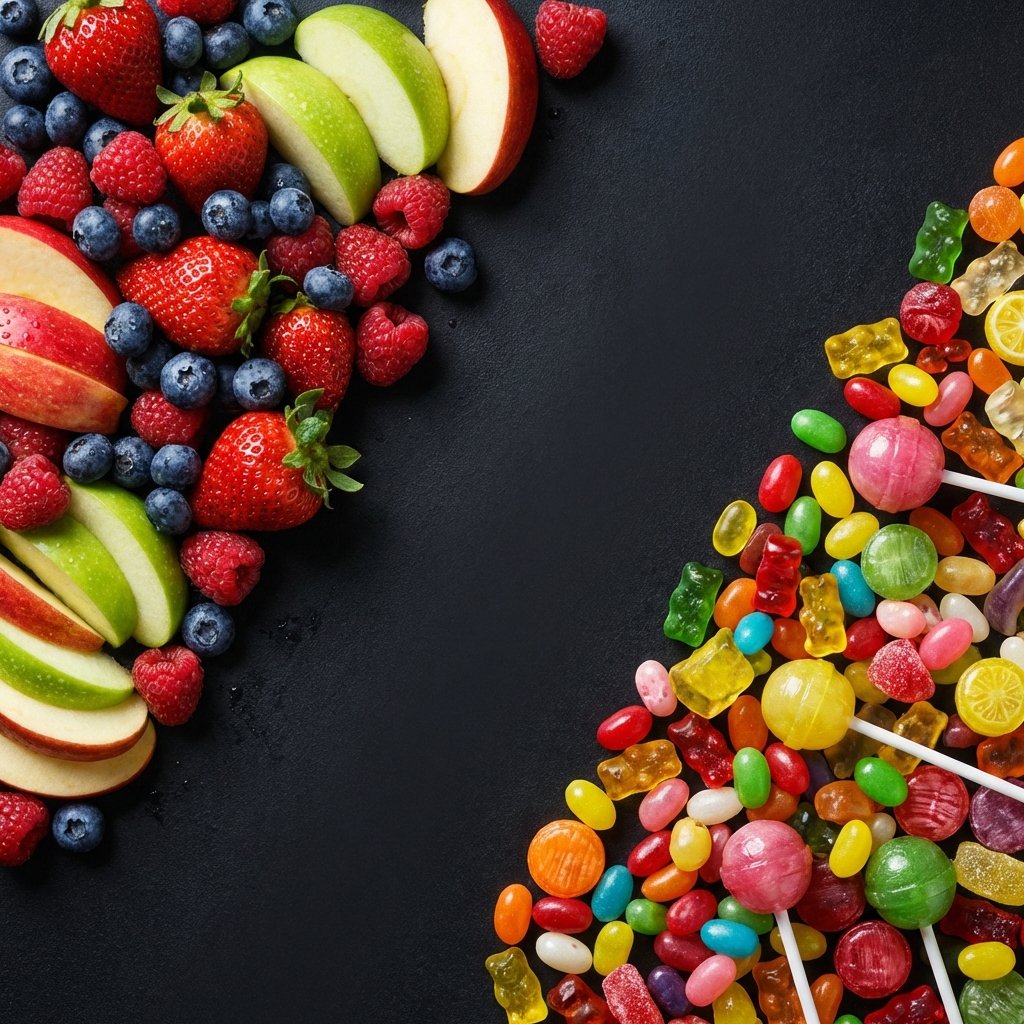
Natural sugar in fruit comes in a package with fiber – industrial sugar comes pure.
Important to know: Fructose in an apple is perfectly fine. Why? Because the apple comes "packaged" – with fiber, water, and vitamins. This slows down uptake. Fructose syrup (HFCS) in cola, on the other hand, rushes unchecked into your liver.
3. The Rollercoaster Ride in the Blood
What really happens when you eat that donut?
🎢 The Insulin Crash
Imagine: You eat sweets on an empty stomach.
- The Rise: Your blood sugar shoots through the roof. You have energy!
- The Fire Department: Your pancreas releases massive amounts of insulin to get rid of the sugar.
- The Crash: The insulin works so thoroughly that your blood sugar falls below the normal level.
- The Consequence: Cravings, shaking, irritability. You immediately need new sugar. The vicious circle begins.
Chronically high sugar consumption can lead to your cells becoming "deaf" to insulin. This is called insulin resistance – the precursor to type 2 diabetes. That's why it's so important to avoid blood sugar spikes.
4. Detective Work in the Supermarket
Don't let "less sweet" deceive you.
The food industry is creative. Because "sugar" has a bad reputation on the ingredient list, other names are often used. When you turn a product around and read the ingredient list, watch out for these aliases.
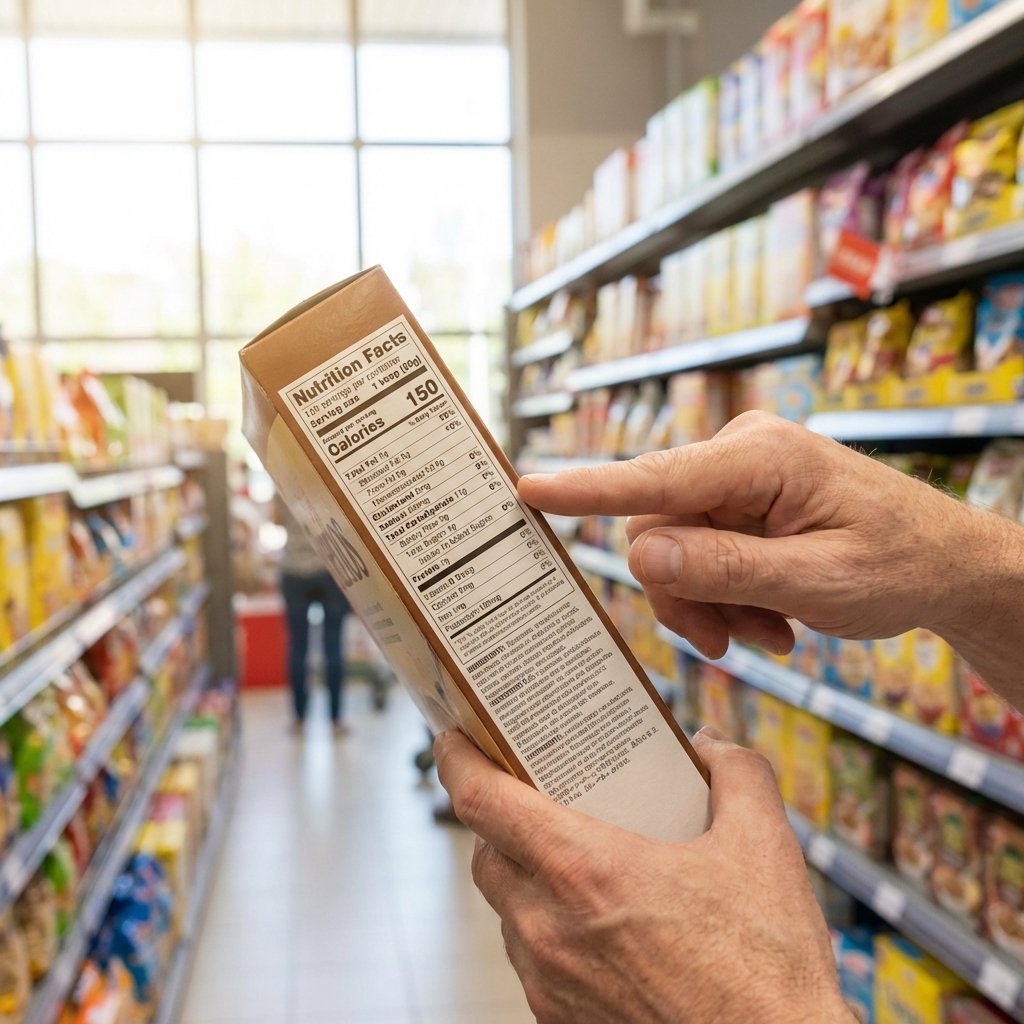
The look at the back: This is where you expose the real sugar bombs.
🔍 The "Ose" Trap
Almost everything that ends in "-ose" is sugar:
- ✓ Dextrose
- ✓ Maltose
- ✓ Raffinose
- ✓ Sucrose
🍯 The Syrup Trap
Sounds natural, but it's highly concentrated sugar:
- ✓ Glucose-fructose syrup
- ✓ Invert sugar syrup
- ✓ Corn syrup (HFCS)
- ✓ Agave nectar
Caution: Even agave nectar consists of almost 90% fructose!
5. Balance Instead of Prohibiting
You don't have to give up sweets forever.
Complete deprivation often only leads to binge eating attacks. The key lies in the quantity and in the "how." Here are strategies on how you can enjoy sugar without riding the rollercoaster.
Not on an Empty Stomach
Eat sweets as a dessert after a meal with fiber and proteins. This "cushions" the stomach and slows down the blood sugar rise.
Don't Drink Your Calories
Avoid sugary drinks. A glass of orange juice has almost as much sugar as cola. Drink water, tea, or coffee and better eat the whole orange instead.
The 80/20 Rule
Eat 80% unprocessed and healthy. The remaining 20% are for the soul. A piece of cake on Sunday is not toxic – it's enjoyment.
6. Your 7-Day Sugar Detox
A little reset for your sense of taste. Try it!
You want to reduce your sugar consumption, but don't know how? This gentle start helps you recalibrate your taste buds. After one week, you will notice: a carrot suddenly tastes sweet again!
📅 Day 1-3: No Sweetened Drinks
This is the simplest and most effective step. Replace soft drinks, syrup coffee, and juices with:
- Water (with lemon/mint)
- Unsweetened tea
- Black coffee
📅 Day 4-5: Cut Out the Sweet Breakfast
No jam on bread, no chocolate cereal. Start the day savory:
- Scrambled eggs with vegetables
- Whole grain bread with avocado or cheese
- Natural yogurt with fresh berries and nuts
- Porridge, only seasoned with cinnamon
📅 Day 6-7: No Sweets or Desserts
The supreme discipline. When the high desire comes, reach for nuts, a piece of dark chocolate (min. 85%), or a cup of tea. You will be surprised how stable your energy level remains.
Common Questions (FAQ)
Theoretically yes, practically it is very hard and also not necessary. Your body needs glucose (which it can also produce from starch). A life completely without *added* sugar is possible and healthy, but socially often difficult. The goal should be reduction, not perfection.
No, hardly. Brown sugar contains minimal traces of minerals, but these are physiologically irrelevant. In the body it looks almost identical to white sugar. Use it for the taste, not for health.
These can be a good alternative as they do not affect blood sugar or hardly do so. Erythritol is often well tolerated. But caution: the sweet taste can signal "sugar is coming!" to the brain and sometimes still trigger cravings.
The WHO recommends a maximum of 25-50g of free sugar per day for adults. That's about 6 to 12 teaspoons. Attention: in a single 250ml energy drink there are often already 27g of sugar!
🍬 Find Your Balance
How much sugar is hidden in your favorite food? Our Health & Wellness Assistant can analyze labels and suggest low-sugar alternatives.
Check Your Sugar Now© 2026 Health & Wellness AI. All rights reserved.